The Way Lessons are Structured and Delivered |
|
|
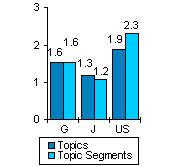
Average number of
topics and topic |
Coherence
of the Lesson In addition to these differences in goals and scripts, we also found differences in the coherence of lessons in the three countries. It seems likely that students will be more successful in making sense of instruction that is more coherent. The greatest differences were apparent between US lessons and Japanese lessons. US lessons were found to be less coherent than Japanese lessons by several criteria. First, American teachers switched from one topic to another within lessons more than Japanese teachers. As shown in the graph, American lessons contained significantly more topics than did Japanese lessons, and significantly more topic segments than both Japanese and German lessons. Second, the changes from topic to topic or from one segment to another in American lessons often were not linked together by the teacher. Japanese teachers were significantly more likely to provide explicit links or connections between different parts of the same lesson. Third, American teachers devoted significantly more time during the lesson to irrelevant diversions than did German or Japanese teachers. Depending when these diversions occur, they can weaken the coherence of the lesson. Finally, American lessons were more frequently interrupted by outside events, such as PA announcements or visitors. This was true for 28 percent of American lessons, 13 percent of German lessons, and zero percent of Japanese lessons. |
 |
|
|
|
|